Today’s readings made me really think about the way in which we receive information and the information age. I agree with a lot of the points made by Boyd and Wesch mainly about the way that we as educators need to help students process the way that they receive digital information.
The term Digital Native was popularized by Marc Prensky. I really enjoyed Boyd’s critique of the term Digital Native Boyd believes that the term digital native obscures the uneven distribution of technological skills and media literacy across youth populations "presenting an inaccurate portrait of young people as uniformly prepared for the digital era and ignoring the assumed level of privilege required to be native. Boyd believes that educators purport the inequity in technological education in this country, because those who are privileged tend to learn technological skills outside of the classroom. We must not assume that all students have innate media literacy; in a world that required media literacy to get well-paying jobs, access to health care educators must do their part to cultivate media and technological literacy
In Boyd’s piece he states, “Censorship of inaccurate or problematic content does not provide youth the skills they will one day need to evaluate information independently” this past statement really articulates some of the philosophical problems in the way that digital immigrants are educating digital natives. What Boyd is referring to is the new crisis of the information age in which we are not teaching students how to see the biases in digital information and to not look to question said information. Instead we are eliminating and preventing them from having access to that information. What are we teaching our children when we are teaching them the sources in which to receive their information instead of having them learn which sources their information should be coming from on their own.
In Michael Wesch’s piece what struck me the most was the following statement, “We have had our why’s, how’s, and what’s upside-down, focusing too much on what should be learned, then how, and often forgetting the why altogether. In a world of nearly infinite information, we must first address why, facilitate how, and let the what generate naturally from there”
I feel that this statement beautifully captures how the philosophy of education needs to change, especially the last fragment “let the what generate from there”. I feel that education should be in that order, and that we must teach students the importance of why they are learning things and what they learn is a produce of them learning how to be learners. I feel that we should be teaching our students to be the best learners that they can be because most of what they learn they are learning on their own in this age.
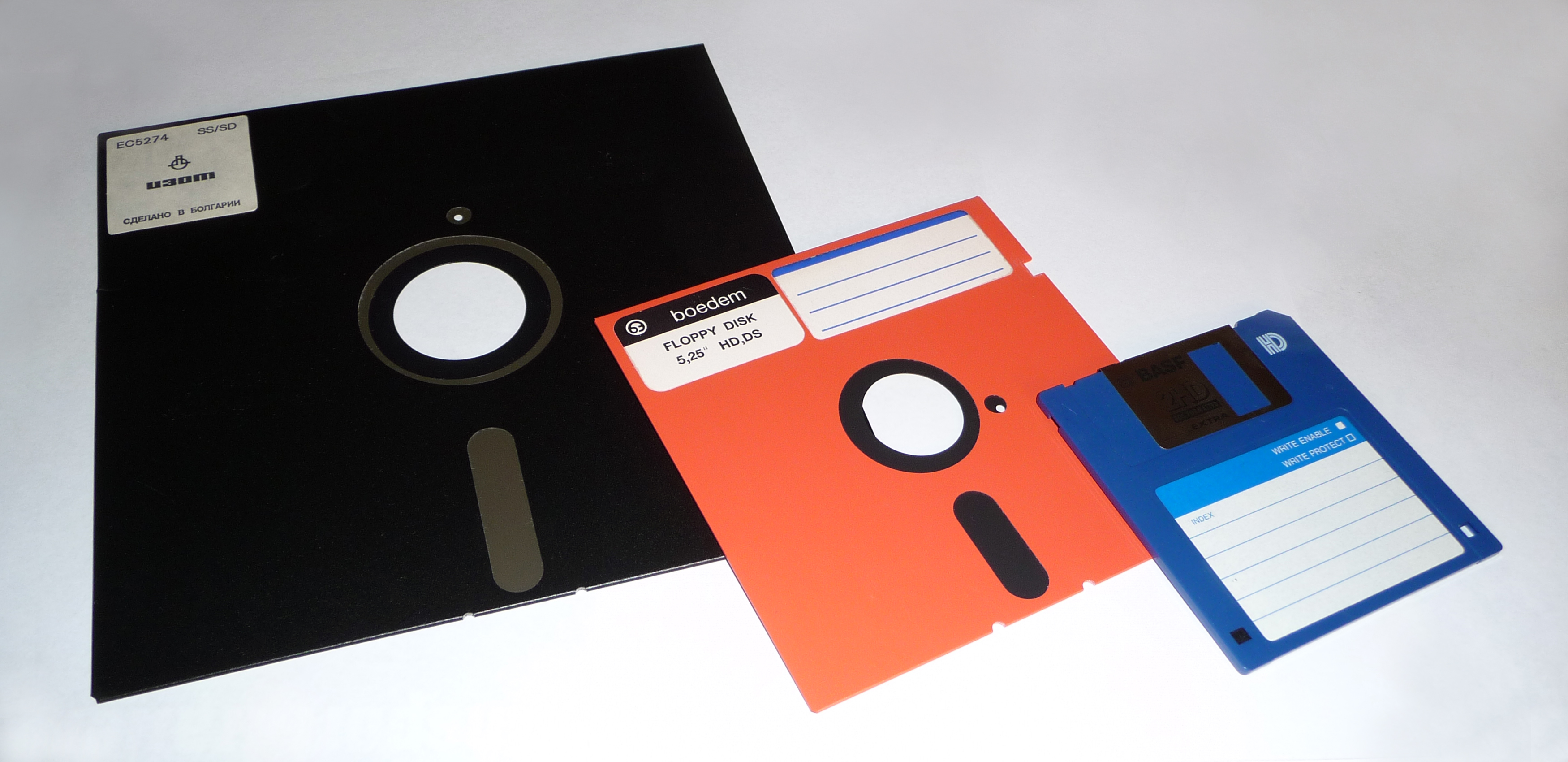
I consider myself to be both a digital immigrant and a digital native. On the one hand in high school we used floppy disks to save our work in class.
When I arrived at college it was a digital world. Floppy disks were replaced by USB hard drives and most papers were written on the computer. I'm pretty hip to technology and social media and the way that it is used, however I don't interact with technology the same way that someone younger than me does. Hence why I feel slightly like a digital immigrant.
htt
Hello My name is Omar Reyes I work at RIC as an Admissions Officer before that I work at an Educational Opportunity Center it is a federally funded grant funded program designed to help low income first generation college students enroll in a higher education institution. Summer is going fantastic When I am not in class I enjoy reading and learning and watching the news. I also am a pretty big New York Knicks fan. I am looking forward to learning a lot this semester.
I wanted to start today's blog by posting a great clip on the English Language from I love Lucy
This week’s reading focused on teaching English as a
second language. As a bilingual person and someone who had to learn English in
Kindergarten, I was struck by both articles. I started by reading “Teaching
Multicultural Children by Virginia Collier. I have often imagined how hard it
would be to teach English as a second language to children. Collier states that
“teachers must be creative and flexible, serve as a catalyst for discovery as
students learn to operate effectively in their multiple worlds, be able to
meditate and resolve intercultural conflicts, keep students on task and serve
as a support base.
The article uses guidelines to teach students who are learning
English as a second language.
1.Be
aware that children use first language acquisition strategies for learning
English as a second language. This
guideline focuses on the belief that students use the same strategies in
learning a language that they used when learning their first language. They
strategically identify patterns in the language, they find ways of identifying
the nuances in the language and “they take risks to try to use the analogies of
the first language”
2.Do
not consider yourself as a remedial teacher expected to correct so—called
deficiencies of your students. (this guideline I really had a tough time
understanding) it states that “the difficulty with teaching languages to native
speakers is that teachers have been trained to teach them as foreign languages.
I really need help understanding this and hope we discuss this guideline in
class.
3.Don’t
teach a second language in any way that challenges or seeks to eliminate the
first language. This rule really resonated with me as I
feel that it is the most important rule. We must teach students to not forget
about their first language or that their first language is wrong. We must
recognize their bi-dialectism. “to affirm their home language means that they
will not be told that they are wrong or that what they say is vulgar or wrong”.
I wonder what Delpit would say about the past statement. I feel that she would
give Ms Colier a high five and they would be best friends.
4.Teach
the standard form of English and students’ home language together with an
appreciation of dialect differences to create an environment of language
recognition in the classroom. And then Delpit would
abruptly end their friendship after Ms Colier brings up this guideline. This
guideline advocates that teachers who teach English should use the student’s
dialect in their classes in order to enrichen the classroom and make the
students feel that they are represented. “So when children come to their
classrooms with their non-standard varieties of English and home language,
teachers must look at the benefits of having multiple ways of talking in the
classroom.” Delpit would disagree, I feel, because of she would want the
students to explicitly learn the language of the culture of power.
5.Do
not forbid young students from code switching in the classroom.Understand the function that code switching
serves.
This weeks reading focused on creating a safe and conducive learning environment for LGBT youth. Safe Spaces: Making Schools and Communities Welcoming for LGBT youth brought up many things that I have not thought about when it comes to the challenges that LGBT youth face in the classroom and in their environments. In order to understand the challenges I thought it was pertinent to find facts about LGBT youth in America. I have attached
them on the margins of this blog post.
The info-graphics just represent what is very clear about american culture, America has a hetero-sexist problem. I believe that most of our education on acceptance of others comes from human interaction. As unfortunate as it is people tend to only care about something until it becomes personal. We can read about the marginalized communities, discuss their plights and even sympathize for their struggles but for a lot of people until they know someone in that marginalized community and have interacted with that person, broken bread with them learned with them that is when a deeper level of understanding occurs. Our education system is at a crossroads in educating students about LGBT issues, and although it seems as though things are getting better, The suicide rate and homelessness rates for LGBT youth are too high. This brings me back to
this week's reading. The authors argue that "children encounter cultural and ethnic norms different from those of their family. If our homes are incubators, keeping our children safe as they grow into patterns of family life, schools are outcubators places that introduce new ways of thinking and behaving". With this statement the author begin to introduce the biggest problem plaguing the LGBT youth in America. The place were students learn things different than the way
that they are brought up is failing to introduce the LGBT community and thus creating an othering of their community. The "word curriculum derives from a word in Latin that means "to run a race" the authors argue that in a race there are winners and losers and that "We contend that the winners are those who see themselves in textbooks, art, films, and other educational materials. Youth who see themselves as wise or powerful main characters or heroes
worthy of celebration and emulation will feel validated included and safe inside their classrooms." If students that represent them are not represented in their curriculum than there is an alienation and a lack of ownership in their education. I have felt like that before with no authors of colors in my English classes in high school, however, ( and this is where my heterosexual privilege lies) if a teacher were to advocate for her class to read more students of color, there would be very little red tape to climb as opposed to reading about characters of different sexual orientation/ gender identity.
Monday, March 21, 2016
Literacy are today's youth digital natives?
Are today's youth Digital Natives
by Boyd discusses how students are digital natives to an evolving technological
world. In the beginning of the article one can already see what the main
argument of the chapter is, "the children who attend school today are
digital natives who think nothing of learning through the use of
technology" The author argues that although teens are active participants
and social media students do not have the knowledge to make the most out of
their online experiences and that the rhetoric of digital natives is
"often a distraction to understanding the challenges that youth face in a
networked world.
Boyd believes that although
students can share or create content online it does not mean that they have the
knowledge to properly consume information, and that educators are lacking in
teaching students the skills to engage with contemporary technology effectively
and meaningfully.
The roots of the derives from a
Marc Prensky article titled Digital Natives and Digital Immigrants where Prensky he states today's students
think and process information fundamentally different from their predecessors.
He states that they should be called digital natives because they are native
speakers of the digital language of contemporary technology, they have not
lived in a world where the internet and computers do not exist. Digital
immigrants are people who "were not born into the digital world but have,
at some later point in our lives become fascinated by and adopted many facets
of technology". Boyd believes that the term digital native obscures the
uneven distribution of technological skills and media literacy across youth
populations "presenting an inaccurate portrait of young people as
uniformly prepared for the digital era and ignoring the assumed level of
privilege required to be native. Boyd believes that educators purport the
inequity in technological education in this country, because those who are
privileged tend to learn technological skills outside of the classroom. We must
not assume that all students have innate media literacy; in a world that
required media literacy to get well-paying jobs, access to health care
educators must do their part to cultivate media and technological literacy.
The article also discusses that
educators do not really teach students how to validate online sources, and
educators typically judge by the brand of the source. For example, a lot of
educators tell students to not use Wikipedia for their sources, and instead
have them use Google or Encyclopedia Britannica without letting them know what
it is that makes one source greater than the other. The author also
interestingly states that research has stated that encyclopedia Britannica is a
less reliable source than Wikipedia. The way that teachers teach students to
use google for their research also creates a problem when students
automatically assume everything found on google is fact. Students are not
learning to question their media, and it is because of the educators not
catching up with the way that technology and media is consumed.
Below is the Ted Talk that this article focuses on in their critique of the term I figured it could be useful
"The systems broken
the schools closed the prisons open, I aint got nothing to lose mafucka we rolling."
With
the first line in the first verse of his chart topping single "Power"
Kanye west hides the harsh realities of the school to prison to pipeline, a
phenomenon that affects low income students of color all over the country. With
that one line Kanye draws a comparison against two opposite institutions,
institutions that we as a society want to believe that have no correlation. We
want to believe that the schools are open and that the prisons are closed but
that simply is not the way that it is, hence why the system is broken. The
schools are segregated and the prisons are open, this line is alluding to the
segregation of both institutions. The school system is segregated because the culture
of power has access to the best educational opportunities and they close it to
students of color. In contrast the prisons are open to students of color as the
population of the prison system is predominantly African American and Hispanic.
This week I really wanted to learn more about the school to prison pipeline
that Kanye West is alluding to in his song Power.
On
rethinkingschools.org I chose to read Arresting Development. Zero Tolerance and The Criminalization of Children by Annette Fuentes, and a short article titled,School to Prison Pipeline in Mississippi. The Arresting Development article
focuses on the school to prison pipeline and zero tolerance policies. The term
Zero tolerance traces its roots to the Reagan presidency and the war on drugs in
the 1980’s, “Congress enacted the Drug Free Schools and Communities act in 1986
bringing the war on drugs to school”. During the Clinton administration zero
tolerance was taken further with the 1994 Safe and Gun-Free Schools Act, that
made bringing a gun to school warrant a one-year expulsion for students and
also provided federal funding for anti-violence programs directed at youth.
These policies were viewed as a way to sway the prediction that was made by
criminologists like James Q Wilson and John Dilulio that viewed African American
and Latino males as “super predators” that would incite a new wave of violence
in the late 90’s. The 1999 shooting at Columbine High School spearheaded the
national move for police in our schools, and while Columbine was a
predominantly white high school most schools that implemented having police in
the schools were schools that had a high population of Blacks and Hispanics. The
schools that were mostly segregated began to become a pipeline for youths of
color to end up in prison.
Although Zero Tolerance in
schools began, the National Center for Education Statistics reported that
incidents of gun violence have been dropping steadily since 1993. Zero
tolerance one focused on guns, alcohol and guns now targets an ever expanding
range of behaviors. It is estimated that from 1997-2007 police officer presence
in high schools increased by a third. Zero tolerance combined with the
increasing police presence in our nation’s high schools are taking away the
disciplining of students from a school to issue to a law enforcement issue. According to Judith Browne Dianis, co-director
of the Advancement Project a civil rights and advocacy group, “Things a police
officer might not arrest someone in a bar fight for, your seeing them make
arrests in schools for. There are a lot
of children arrested for disorderly conduct, which has a very subjective
definition. Whoever is standing there gets to define it.” Schools with officers
are 5 times more likely for a student to be arrested for disorderly conduct.
Disorderly conduct is an offense that is most often left to the interpretation of
the school system and that in my opinion should not be a reason to arrest a
student instead it should be a time for the school to discipline a student and
not to criminalize a student.
Zero tolerance by the numbers.
In 2009-2010 school year California recorded
757,000 suspensions it was only second to Texas that had 1.67 million
suspensions and the population of texas schools is only 4.7 million students.
According to the ACLU there are more African Americans
in the US justice system than there were slaves in the 1850’s.
40 percent of students expelled in the US are
Black
70 percent of students arrested in school are
Black and Latino
Currently African Americans and Hispanics youth
make up 3/5ths of the juvenile delinquent prison population.
Regan’s war on drugs was primarily waged in
communities of color. Although people of color are no more likely to sell drugs
as their white counterparts, Blacks and Hispanics historically have higher
rates of arrests.
African Americans comprise 14 percent of
regular drug users but are 37 percent of those arrested for drug offenses.
From 1980-2007 about one in three of 25.4
million adults arrested for drugs was Black
Zero
tolerance often targets students in populations of color. Schools that are
segregated are more likely to have a police presence at their high schools.
According to Russel Skiba, a professor of educational psychology at Indiana
University, Skiba suggests that when teachers are inexperienced and come from
different racial and class backgrounds they teach “cultural discontinuities”
and they create adversarial dynamics in the class room. An alienating
curriculum poor classroom management skills and negative stereotypes of black
youth can lead to authoritarian disciplining and overreliance on suspensions. Hence what we talk about in the Finn article
and the segregation of schools. Below you can find a great video explaining the school to prison pipeline.
This brings me to the short article on Meridian Mississippi, a town who
was sued by the Department of Justice in 2012. Meridian is a perfect example of
how the prison to pipeline works in some of our school systems. The lawsuit
alleged that the city’s juvenile justice system has operated a school to prison
pipeline that shoves students out of school and into the criminal justice
system violating young people’s due process rights along the way”.
In Meridian when schools wanted to discipline students they called the
police instead arresting students as young as 10 years old, in most times the
officers didn’t even know if the offense was worthy of an arrest. The complaint
read that the students were incarcerated without for days without a hearing or
even knowing why they were arrested. The
department of justice lawsuit came after years of research by organization like
the Southern Poverty Law Center, (SPLC) that determined that 67 percent of
youth in detention centers in Mississippi arrived from the Meridian school
system. In between school and detention-schools, students were denied access to
lawyers and due process, “the administrators were the judge and executioner”.
The managing attorney of the SPLC states, that although Meridian is a city
comprised of 61 percent African American over a five-year period, “there was
never once a white kid that was expelled or suspended for the same offense that
kids of color were suspended for”.
NOT ONE!
One middle school student was suspended over 30 times for offense
including wearing the wrong colored socks and being late to class. The
Department of justice in its lawsuit said “that the city police department served
as a “de-facto taxi service” shuttling students away from school and into youth
jails.
Lastly I will leave this hip-hop-centric blog post with a very brief
analysis of another Kanye West song, titled new slaves. The song is a song dedicated
on talking about the Prison Industrial complex and the privatizations of our
prisons. Prisons owend by private corporation and not by the judicial system.
The biggest private prison system corporation is the CCA. The way that they
work is that they receive tax payer dollars for ever inmate in their prisons.
In Kanye West song New Slaves, he states
I
know that we the new slaves... Meanwhile the DEA, teamed up with the CCA They tryina lock n---s up, they tryna make new
slaves See that's the privately owned prison, get your
piece today They prolly all in the Hamptons, braggin 'bout
what they made
With this
verse Kanye is referring to the war on drugs. The DEA being the Drug
Enforcement Agency and the CCA being the largest private prison corporation in
the world, and the profits that exist with having a private prison be filled
with prisoners. This song expresses a sentiment about the distrust of minorities
and the judicial system, and the Reagan era war on drugs that sent majority African
Americans and Hispanics to prison at alarming rates. He compares the prison
system to slavery because it seems that it is mostly the people with slave
ancestry who are getting arrested and who are being profited from in the prison
industrial complex. This is why I feel that the, The system is broken,
 Today’s readings made me really think about the way in which we receive information and the information age. I agree with a lot of the points made by Boyd and Wesch mainly about the way that we as educators need to help students process the way that they receive digital information.

 He
He


