Tuesday, July 5, 2016

This I believe

I believe that education in at-risk communities should cultivate the imagination as without imagining nothing outside of your current situation is possible.

I believe that the way that we fund education creates cycles of poverty and violence in inner city neighborhoods.

I believe that if educational policy isn’t shaped by teacher’s and not just government officials then our educational system will eventually burst.

For my final project I plan on working on the Prezi presentation since it is a type of presentation style that I have never created for myself. We currently use a Prezi when we do presentation but it hasn’t been updated in a while and I never created one for myself I have been using a Prezi that was created by one of my coworkers.
My presentation is so completely different than the average admissions presentation because of the population that I recruit. I recruit mostly at-risk students from background very similar to mine. I usually tell a story about my dad and the word opportunity and I feel that with visual aid and pictures of my father and words on the screen I could make the story a bit more powerful.
Although I’m leaning towards the Prezi.


I am still considering Endnote. Endnote is a source gathering resource. It compiles sources and articles and cites them for you. I feel that I am lacking the modern capacity to compile and organize information. Manila folders and desk drawers don’t do it for me anymore. I usually end up with a folder of stuff that I can’t find when I actually need. I feel that end note could really help me compile data to potentially write a Doctoral thesis in a couple of years.

Thursday, June 30, 2016

Girls Worms and Body Image

In tonight's assignment I focused on the article Girls Worms and Body Image by Kate Lyman. Lyman is a 3rd grade teacher in Wisconsin. It starts with her eaves dropping on two elementary school students fighting over a health video because they"needed it cause they were fat" the students then walked away. It seemed to Lyman that something had made the girls feels self conscious about their body image and she thought about her own upbringing. She started to plan lessons around gender and media in her classroom.

First lesson she separated her students by gender in her classroom and made them write 10 things of what they think about the opposite sex. The student all came back with different stereotypes about the opposite gender. Stereotypes like women were better at making, and men made more money that women. The student argued vehemently about these stereotypes and she realized that she had failed.

In another lesson she planned a discussion  around toys and the stereotypes about gender. She had the student plan a lesson around analyzing a barbie doll. She made them ask questions about the doll. What does the doll look like? Does it look like any of the women that you know? etc. She asked them why she though the toy manufacturers made her look that way, "the consensus was that girls want to look like her so that men would like them better" The students responded well, she guided them to come to the conclusion that the Barbie doll was teaching them what pretty was supposed to look like and that they didn't know anyone that looked like that. The teacher wanted the students to be able to critically analyze the hidden message in advertisements.

The last lessons she planned was an old fashioned day in which the students had homework to ask their parents how school was when they were in school. Students came back with many different responses. The old fashioned day was planned and female students were asked to come in with dresses (they could not were jeans) and that day the students were treated differently by their gender. They used similar disciplines of the old days: the dunce caps, the harsh repetition writing punishments. The teachers called on the boys more than they called the girls, to criticizing the girls for more sloppy handwriting. Lyman was interested to see if the girls and the boys notices the differences in gender. Not only did they notice but the boys seemed happy and the girls were very unhappy saying things "you paid more attention to the boys than you did the girls"

What I learned from the article as an outsider is that teaching lessons around media literacy on social issues is hard. Lyman shows examples of 4 lesson in her article but she does not stop trying. What she does well in her lessons is that she is giving these children real life examples of the issue that she is facing.

Wednesday, June 29, 2016

Brave

Since my youth I was one of the children that due to low resources, was babysat by the television and video-games. Popular children's culture shaped most of my beliefs, since most the first images of people other than me I saw on that magical box. In the late 80's and 1990's nothing was bigger than Disney and their movies and in my neighborhood if you were one of those families that could afford to have the Disney channel your house was the one we all tried to visit. I learned a lot about my beliefs from Disney culture and always put myself in the shoes of the princes. especially Aladdin. (the only prince that somewhat resembled what I looked like) I learned how grieve with the Lion King, (but I also learned that there are places that you shouldn't go and not to trust people with dark hairs), With Aladdin I learned that being poor was remedied by a magic lamp and three wishes and that the more successful I became that a princess would be waiting for me. They played a huge role in my life as I learned to interact and learned about beauty and how the princess involved in most films were "model" skinny and always seemed to be needed to be saved by the prince.

The film Brave challenges all of the things I learned from watching animated movies as a child. The protagonist Merida's mother is often trying to teach her daughter how to be a princess and how to do things in a way that princess should be doing them and her daughter Merida is always questioning that. If you were to replace the word princess with woman, or lady, or girl, the movie would become more direct at delivering its message. The protagonist in this film is not your stereotypical Disney princess. Merida is interested in challenging the status quo. She does not want to be waiting for her prince. In fact when her suitors comes she even beats them in an archery contest. The most symbolic scene comes when after beating the suitors in an archery contest, the dress that she has one, essentially becomes too tight for her and she says something to the tune of "it doesn't fit anymore" and the dress rips. What doesn't fit is her assigned gender roles. In the movie most of the time that her mother is trying to get her to conform she is making her cover up her hair and wear a dress that she can barely move in. This is the film maker's way of showing female containment and showing through metaphor how females are expected to be conformed in society.

Another thing that the movie did really well with the plot is the concept of perfection in the movie. Women are expected to be perfect and to be compassionate beings Merida isnt that.  I think with the plot of turning her mom into a bear and the fact that Merida was the one that made a mistake and she was the one that had to fix it was very important. This goes against the princess stereotype of having to be saved by a prince but it also goes against the stereotype of the perfection that we expect in women.

Tuesday, June 28, 2016

Are we really Digital Natives

Today’s readings made me really think about the way in which we receive information and the information age. I agree with a lot of the points made by Boyd and Wesch mainly about the way that we as educators need to help students process the way that they receive digital information.

The term Digital Native was popularized by Marc Prensky. I really enjoyed Boyd’s critique of the term Digital Native Boyd believes that the term digital native obscures the uneven distribution of technological skills and media literacy across youth populations "presenting an inaccurate portrait of young people as uniformly prepared for the digital era and ignoring the assumed level of privilege required to be native. Boyd believes that educators purport the inequity in technological education in this country, because those who are privileged tend to learn technological skills outside of the classroom. We must not assume that all students have innate media literacy; in a world that required media literacy to get well-paying jobs, access to health care educators must do their part to cultivate media and technological literacy


In Boyd’s piece he states, “Censorship of inaccurate or problematic content does not provide youth the skills they will one day need to evaluate information independently” this past statement really articulates some of the philosophical problems in the way that digital immigrants are educating digital natives. What Boyd is referring to is the new crisis of the information age in which we are not teaching students how to see the biases in digital information and to not look to question said information. Instead we are eliminating and preventing them from having access to that information. What are we teaching our children when we are teaching them the sources in which to receive their information instead of having them learn which sources their information should be coming from on their own.

In Michael Wesch’s piece what struck me the most was the following statement,
“We have had our why’s, how’s, and what’s upside-down, focusing too much on what should be learned, then how, and often forgetting the why altogether. In a world of nearly infinite information, we must first address why, facilitate how, and let the what generate naturally from there”


I feel that this statement beautifully captures how the philosophy of education needs to change, especially the last fragment “let the what generate from there”. I feel that education should be in that order, and that we must teach students the importance of why they are learning things and what they learn is a produce of them learning how to be learners. I feel that we should be teaching our students to be the best learners that they can be because most of what they learn they are learning on their own in this age.


Monday, June 27, 2016

Digital Natives and Digital Immigrants

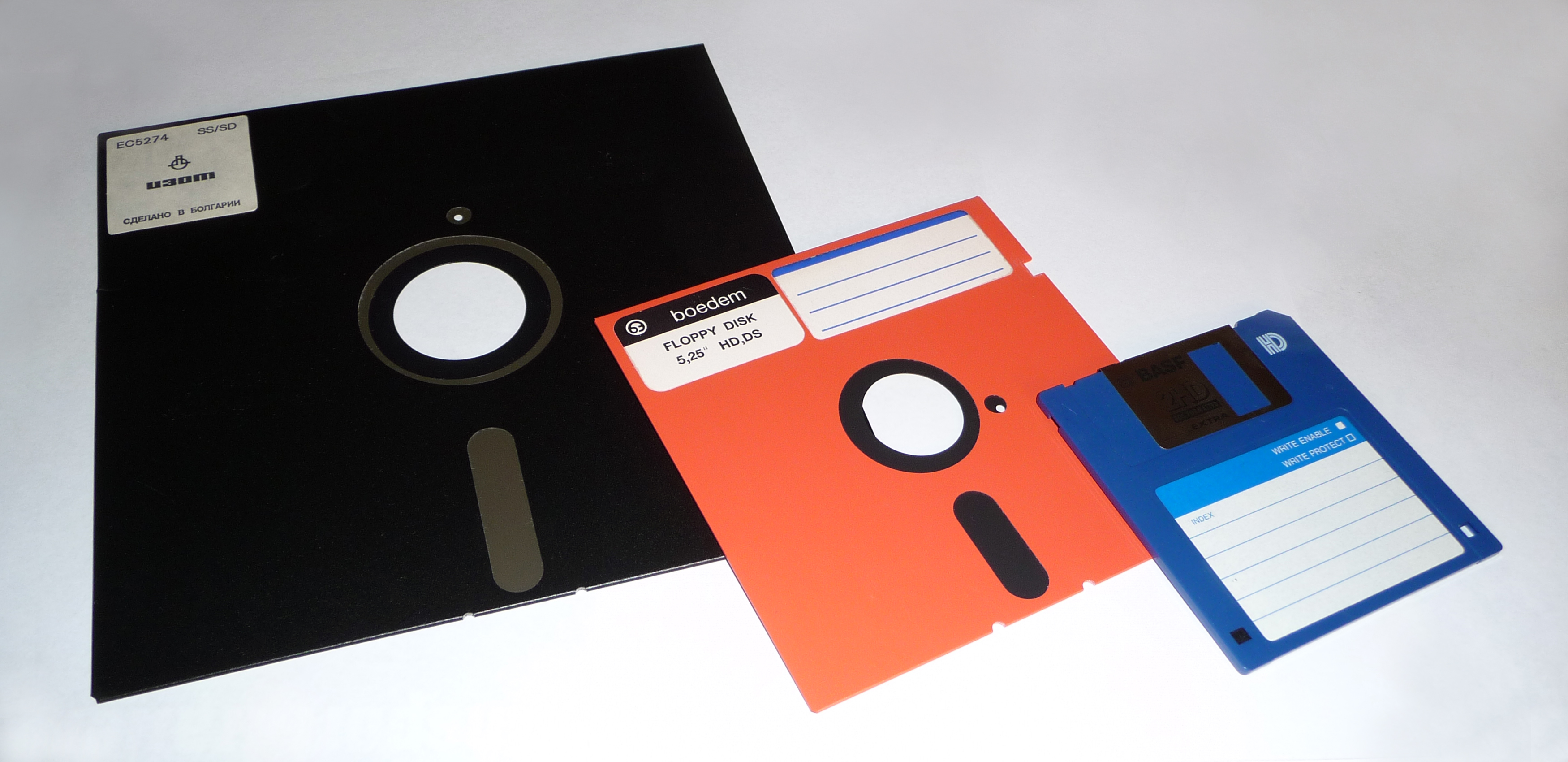
I consider myself to be both a digital immigrant and a digital native. On the one hand in high school we used floppy disks to save our work in class.


 When I arrived at college it was a digital world. Floppy disks were replaced by USB hard drives and most papers were written on the computer. I'm pretty hip to technology and social media and the way that it is used, however I don't interact with technology the same way that someone younger than me does. Hence why I feel slightly like a digital immigrant.


htt

Hello My name is Omar Reyes I work at RIC as an Admissions Officer before that I work at an Educational Opportunity Center it is a federally funded grant funded program designed to help low income first generation college students enroll in a higher education institution. Summer is going fantastic When I am not in class I enjoy reading and learning and watching the news. I also am a pretty big New York Knicks fan. I am looking forward to learning a lot this semester.

Monday, April 11, 2016

Teaching Multicultural Children

I wanted to start today's blog by posting a great clip on the English Language from I love Lucy

This week’s reading focused on teaching English as a second language. As a bilingual person and someone who had to learn English in Kindergarten, I was struck by both articles. I started by reading “Teaching Multicultural Children by Virginia Collier. I have often imagined how hard it would be to teach English as a second language to children. Collier states that “teachers must be creative and flexible, serve as a catalyst for discovery as students learn to operate effectively in their multiple worlds, be able to meditate and resolve intercultural conflicts, keep students on task and serve as a support base.
The article uses guidelines to teach students who are learning English as a second language.
1.      Be aware that children use first language acquisition strategies for learning English as a second language.  This guideline focuses on the belief that students use the same strategies in learning a language that they used when learning their first language. They strategically identify patterns in the language, they find ways of identifying the nuances in the language and “they take risks to try to use the analogies of the first language”
2.      Do not consider yourself as a remedial teacher expected to correct so—called deficiencies of your students.  (this guideline I really had a tough time understanding) it states that “the difficulty with teaching languages to native speakers is that teachers have been trained to teach them as foreign languages. I really need help understanding this and hope we discuss this guideline in class.
3.      Don’t teach a second language in any way that challenges or seeks to eliminate the first language. This rule really resonated with me as I feel that it is the most important rule. We must teach students to not forget about their first language or that their first language is wrong. We must recognize their bi-dialectism. “to affirm their home language means that they will not be told that they are wrong or that what they say is vulgar or wrong”. I wonder what Delpit would say about the past statement. I feel that she would give Ms Colier a high five and they would be best friends.
4.      Teach the standard form of English and students’ home language together with an appreciation of dialect differences to create an environment of language recognition in the classroom. And then Delpit would abruptly end their friendship after Ms Colier brings up this guideline. This guideline advocates that teachers who teach English should use the student’s dialect in their classes in order to enrichen the classroom and make the students feel that they are represented. “So when children come to their classrooms with their non-standard varieties of English and home language, teachers must look at the benefits of having multiple ways of talking in the classroom.” Delpit would disagree, I feel, because of she would want the students to explicitly learn the language of the culture of power.
5.      Do not forbid young students from code switching in the classroom. Understand the function that code switching serves.